UK UFC Betting Sites and Odds Analysis
 Available in US
Table of Contents
- Evaluating the Growth of UFC Betting Markets in the UK
- What Every UK Punter Needs to Know Before Betting on the UFC
- How UFC Betting Works in the UK
- UFC Betting Markets at a Glance
- Reading UFC Odds: Fractional, Decimal, and American
- What You Need Before Placing a UFC Bet
- Fighter Analysis: What the Stats Tell You
- Strategy Fundamentals for UFC Betting
- Bankroll Management and Betting Discipline
- The UK Regulatory Landscape for UFC Bettors
- Common Mistakes New UFC Bettors Make
- 90% accuracy per leg, 10 legs: only a 35% chance of sweeping the card
- Frequently Asked Questions
By MMA Betting Analyst
Evaluating the Growth of UFC Betting Markets in the UK
I placed my first UFC bet in 2018 on a Fight Night card that most casual fans had already forgotten about by Monday morning. The stake was small — ten quid on an underdog grappler whose takedown numbers looked absurd relative to his opponent’s defence. He won by second-round submission, and the payout was irrelevant compared to what that single bet taught me: UFC betting rewards preparation in a way that few other sports can match.
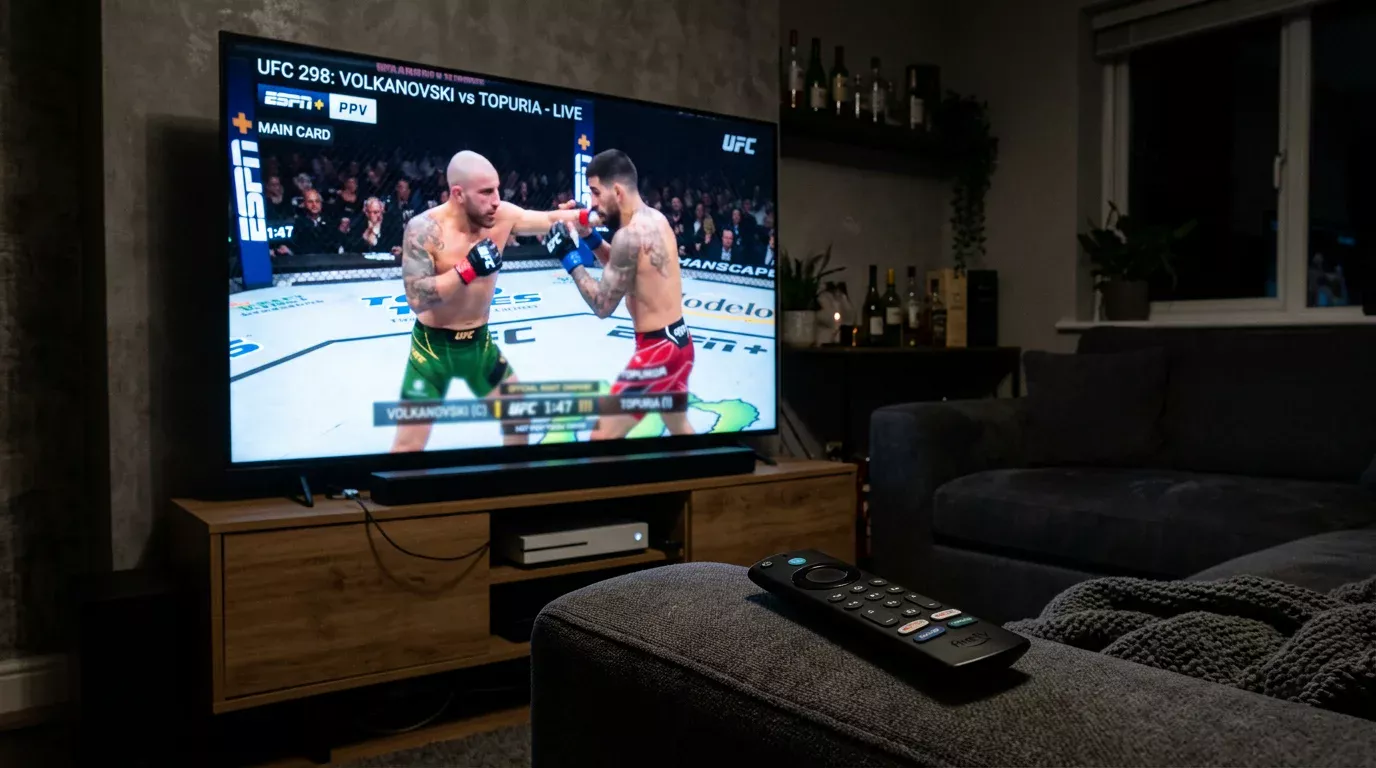
Eight years later, the landscape has shifted beyond recognition. UFC is now valued at roughly $23 billion, fuelled by a seven-year, $7.7 billion media rights deal with Paramount that moved every numbered event and 30 Fight Nights a year onto a single streaming platform. The debut card on Paramount+ pulled 4.96 million average minute viewers and peaked at 5.93 million simultaneous streams — the largest exclusive live event in the platform’s history. David Ellison, Paramount’s chairman and CEO, said the partnership had “started ahead of expectations,” and the numbers back him up: over 10 million households watched more than 100 million hours of UFC content in the first quarter of 2026 alone, delivering viewership more than 15 times the average pay-per-view event over the previous two years.
For UK punters, the timing is ideal. The British gambling market generated GBP 16.8 billion in gross gambling yield in the year to March 2025, with online betting accounting for GBP 7.8 billion of that total — nearly half the entire industry. Sports betting participation sits at 10% of the adult population, and combat sports are carving out a bigger slice every season. The octagon is no longer a niche curiosity sitting behind football and horse racing; it is a mainstream betting product with deep markets, competitive odds, and a regulatory framework that genuinely protects you.
UFC in 2026: The global UFC market is projected at $1.74 billion this year, growing toward $2.79 billion by 2033 at an 8% compound annual growth rate. A $350 million sponsorship agreement with DraftKings demonstrated how seriously the betting industry takes this sport.
This guide exists because most UFC betting content reads like a glossary stapled to a deposit button. The bookmaker-run guides tell you what a moneyline is but never explain how to evaluate one. They mention “fighter styles” without giving you a single metric to measure them. I have spent years pulling apart fighter data, tracking line movement, and working through the maths that separates a punter from an analyst — and I have written this piece to hand you every tool I use.
Whether you have never placed a bet on a UFC fight or you are looking to sharpen an existing approach, the full journey follows — from mechanics and markets through fighter data, strategy, and the regulatory framework that protects your money.
What Every UK Punter Needs to Know Before Betting on the UFC
- UFC betting in the UK is legal, tax-free on winnings, and available through any UKGC-licensed operator — but you must be 18+ with verified identity before placing a single wager.
- Favourites win roughly 68% of UFC bouts, yet blindly backing them destroys long-term value. Underdogs at +200 or longer have won 39% of fights since 2020, making selective underdog plays essential.
- Method of victory and over/under rounds offer better edges than moneyline alone — heavyweight bouts finish inside the distance over 70% of the time, while flyweight fights go to decision more than half.
- Flat-stake bankroll management — risking 1-3% per bet — protects your funds through inevitable losing streaks and keeps emotion out of your decision-making.
How UFC Betting Works in the UK
The first time a friend asked me how UFC betting actually works, I made the mistake of starting with odds formats. His eyes glazed over in about fifteen seconds. So let me do the opposite here and start with what happens in practice — because the structure is simpler than you think, and understanding it will make everything else in this guide click.
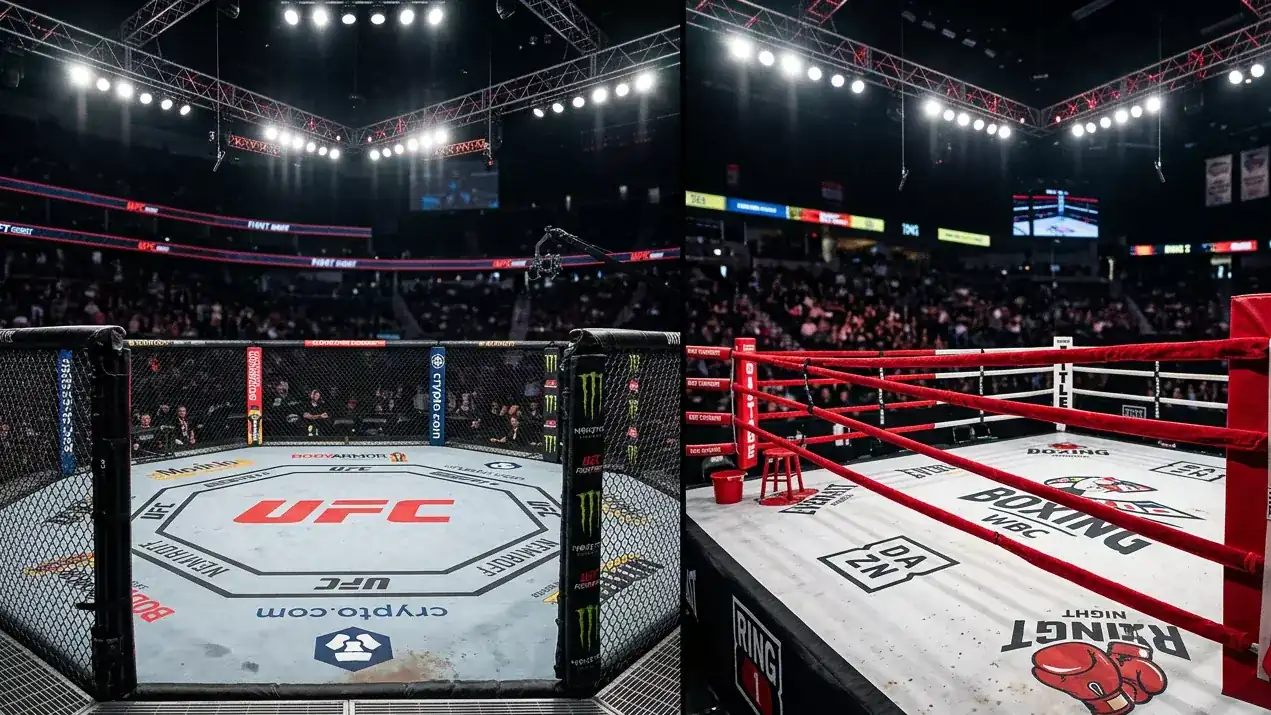
A UFC fight is a contest between two individuals inside an octagonal cage. Each fight is scheduled for either three rounds (most of the card) or five rounds (main events and title fights), with each round lasting five minutes. A fight ends in one of several ways: knockout, technical knockout, submission, judges’ decision, or — rarely — a draw or no contest. When you bet on a UFC fight, you are wagering on some aspect of that outcome: who wins, how they win, when they win, or whether the fight reaches the judges at all.
Every UKGC-licensed bookmaker that carries UFC will present the available markets for an upcoming fight card. The fight card is simply the list of bouts scheduled for that event, divided into the prelims (early fights) and the main card (the headline bouts). You pick a fight, choose a market, set your stake in pounds, and confirm. The bookmaker calculates your potential return based on the odds attached to your selection, and if your pick lands, you get paid. All gambling winnings in the UK are completely tax-free — the operator pays the duty, not you.
Stake — the amount of money you put down on a bet. In UK betting, your stake is always separate from your return: if you bet GBP 10 at odds of 3/1, your return is GBP 40 (GBP 30 profit plus your original GBP 10 stake).
Moneyline — the simplest UFC market, where you bet on which fighter wins the bout regardless of how or when. Also called “match winner” or “fight winner” at some UK bookmakers.
The betting window opens days or sometimes weeks before an event, and the odds shift as money flows in. Early odds reflect the bookmaker’s initial assessment; by fight night, those numbers have been shaped by public money, sharp bettors, and sometimes news from the fighters’ camps — an injury rumour, a weight cut struggle, a late change of opponent. That movement is not noise. It is information, and learning to read it is one of the most valuable skills a UFC bettor can develop.
What makes UFC betting distinct from football or horse racing is the individual nature of the sport. Two people step into the cage, and their skills, conditioning, and preparation determine the result. That directness means the data you gather on each fighter translates more cleanly into betting insight than in almost any team sport.
Quick example: Suppose Fighter A is listed at 1/3 (fractional) to beat Fighter B at 2/1. A GBP 30 bet on Fighter A returns GBP 40 (GBP 10 profit plus your GBP 30 stake). A GBP 10 bet on Fighter B returns GBP 30 (GBP 20 profit plus your GBP 10 stake). The lower the odds, the more the market expects that fighter to win — but lower odds also mean smaller payouts relative to your stake.
Before you place any UFC bet, confirm these five things:
- The bookmaker holds a valid UK Gambling Commission licence — check the UKGC register directly.
- You have completed identity verification (a legal requirement for all UK operators).
- You understand the specific market you are betting on — moneyline, method of victory, rounds, or another selection.
- You have set a deposit limit that matches your personal budget, not your enthusiasm.
- You know that all winnings are tax-free; the bookmaker handles the betting duty on your behalf.
That checklist is not decorative — it covers the practical requirements every UK bettor encounters during sign-up. With those basics locked in, you are ready to look at the markets themselves.
Now that the mechanics are clear, the next question is obvious: what exactly can you bet on?
UFC Betting Markets at a Glance
I remember scanning a UFC fight card for the first time and being surprised by how many ways the bookmaker let me wager on a single bout. Football gives you match result, correct score, maybe a goalscorer market. UFC hands you a menu that can run to a dozen options per fight — and each one rewards a different type of analysis. That depth is both the appeal and the trap, because betting on the wrong market for a given matchup is one of the fastest ways to leak money.
Here is a practical overview of the major markets you will encounter at any UK bookmaker carrying UFC. I am keeping this deliberately concise — each market has its own strategic layer, and I cover the deeper mechanics in the full breakdown of every UFC betting market.
Moneyline
The moneyline is a straight pick: which fighter wins? It does not matter whether they win by knockout or split decision. In 2025, bookmaker favourites won 342 of 506 bouts where a clear favourite existed — roughly 68%. That sounds comfortable until you remember that favourites at short odds return thin margins, and a single upset wipes out several winning bets. The moneyline is the entry point for most bettors, but it is not automatically the best value on any given fight.
Method of Victory
This market asks you to predict not just who wins but how. The typical categories are KO/TKO, submission, and decision. Some bookmakers split KO and TKO into separate options; others combine them. The data here is essential: across 520 UFC bouts in 2025, there were 65 knockouts, 103 technical knockouts, 92 submissions, and 253 decisions. That means roughly half of all fights went to the judges — a number that shifts dramatically depending on the weight class.
Moneyline
Simpler to analyse. Lower odds on favourites. Requires only picking the winner. Best when the skill gap is clear but the method is unpredictable.
Method of Victory
Higher odds and bigger payouts. Requires understanding fighter styles. Best when the matchup strongly favours a specific finish type.
Over/Under Rounds

Instead of picking a winner, you bet on whether the fight lasts longer or shorter than a specified number of rounds — typically 1.5 or 2.5 in a three-round bout, and 2.5 or 3.5 in a five-round main event. In the heavyweight division, around half of all fights end by KO or TKO and only 28.6% reach a decision — the lowest rate of any weight class. Drop down to flyweight, and decisions account for over 53% of outcomes. That division-level data is your starting point for any totals bet.
Round Betting
This is the precision market: you pick the exact round in which the fight ends. The odds are generous because the probability of nailing a specific round is low, but informed analysis narrows those odds considerably.
Parlays and Accumulators
A parlay — called an accumulator in UK betting language — combines multiple selections into one bet. All legs must win for the bet to pay out, but the combined odds multiply. The appeal is obvious: a three-leg parlay of short-priced favourites can turn a modest stake into a meaningful return. The risk is equally clear — one upset kills the entire bet.
In the heavyweight and light heavyweight divisions, more than 60% of bouts end before the judges’ scorecards are needed. As fighters get smaller and faster, the decision rate climbs — flyweight and bantamweight fights go the distance more often than not.
Futures
Futures let you bet on outcomes that are weeks or months away — typically, which fighter will hold a division’s championship belt by a certain date. The odds can be generous because you are accepting the risk of injuries, matchmaking changes, and long waits. Historically, 12 of the 19 fighters who won a UFC title as underdogs went on to defend that belt successfully, which suggests the futures market can underprice emerging champions.
Prop Bets and Specials
Proposition bets cover everything outside the main markets: will the fight feature a knockdown, will a specific fighter land more than a set number of significant strikes, will the event produce a Fight of the Night bonus. Prop markets are thinner and less liquid, which means odds can be softer — but they also require a level of statistical familiarity that goes beyond casual viewing.
The key principle across all these markets is that each one rewards a different analytical lens. Choosing the right market for a given matchup is half the battle — and that choice gets sharper once you understand how the odds behind each market are constructed.
Every one of those markets runs on odds, and odds are only useful if you can actually read them.
Reading UFC Odds: Fractional, Decimal, and American
A colleague once told me that odds are just prices — and that one sentence changed how I think about betting. You are not predicting the future when you read a set of odds. You are reading a price tag that tells you what the market is willing to pay you for taking a particular risk. Once that reframing clicks, the three odds formats used across UK, European, and American bookmakers stop looking like maths homework and start looking like tools.
Most UK bookmakers default to fractional odds. A fighter listed at 5/1 pays you five pounds of profit for every one pound staked. A fighter at 1/4 pays twenty-five pence of profit for every pound you risk. The first number is what you stand to gain; the second is what you have to put up. Simple enough on the surface, but fractional odds get awkward when you are trying to compare 11/8 against 6/4 at a glance — which is why many experienced bettors switch to decimal.
Fractional to decimal conversion: Take 5/1. Divide 5 by 1, then add 1. That gives you 6.00 in decimal format. A GBP 10 bet at 6.00 returns GBP 60 total (GBP 50 profit plus your GBP 10 stake). For 1/4: divide 1 by 4, add 1, and you get 1.25. A GBP 40 bet at 1.25 returns GBP 50 (GBP 10 profit plus your GBP 40 stake).
Decimal odds show your total return per pound staked, including the stake itself. A fighter at 2.50 means every pound returns two pounds fifty. A fighter at 1.33 returns one pound thirty-three. The advantage of decimal is speed: the bigger the number, the bigger the underdog, and you can rank fighters by odds instantly without doing fractions in your head.
American odds appear on US-facing coverage and platforms. A minus number (-200) tells you how much you stake to win $100; a plus number (+200) tells you what you win from a $100 stake. UK punters rarely use them directly, but following UFC media or tracking international line movement means encountering them constantly. The conversion is straightforward: +200 American equals 3/1 fractional equals 3.00 decimal.
Worked example: reading a full fight line
Fighter A: 4/9 fractional | 1.44 decimal | -225 American
Fighter B: 7/4 fractional | 2.75 decimal | +175 American
Fighter A is the favourite. A GBP 45 bet on Fighter A at 4/9 returns GBP 65 (GBP 20 profit). A GBP 20 bet on Fighter B at 7/4 returns GBP 55 (GBP 35 profit). Same fight, same bookmaker, two very different risk-reward profiles.
As noted earlier, roughly two out of three

UFC favourites deliver. That baseline matters because it tells you the market’s default expectation. But “delivers” and “profitable” are not the same word. A favourite priced at 1/5 needs to win more than 83% of the time just to break even over the long run, and no fighter in any weight class wins at that rate consistently. The odds are not a prediction of who wins. They are a price — and your job is to figure out whether that price is fair.
For a deeper walkthrough of implied probability, overround, and how to calculate whether a price genuinely offers value, I have written a dedicated guide to UFC betting odds that covers each format in full detail with conversion tables and profit calculators.
Reading odds is one thing. Being ready to act on them is another — and there are a few practical boxes to tick before you place your first wager.
What You Need Before Placing a UFC Bet
I have watched people get excited about a fight card, rush to open a betting account, and then hit a wall at the identity verification stage twenty minutes before the main event. Do not be that person. The preparation is not complicated, but it does take a bit of time — and finishing it in advance means you can focus on the actual analysis when fight week arrives.
Age and Identity
You must be 18 or older to place a bet in the United Kingdom. Every licensed operator verifies your age and identity before allowing withdrawals — and most now run those checks before you can even deposit. Have a valid photo ID and a recent proof of address ready. Some bookmakers clear verification in minutes; others take a day or two. Get it done before fight week.
Choosing a Licensed Operator
The non-negotiable requirement is a UK Gambling Commission licence. An operator without one is not regulated under UK law, which means you have no formal recourse if something goes wrong with your account, your bets, or your withdrawals. The UKGC publishes a searchable register of every licensed operator on its website — use it. This is not a suggestion; it is the single most important filter you can apply.
Online gambling in the UK generated GBP 7.8 billion in gross gambling yield in the year to March 2025 — nearly half the industry’s total output. That scale means dozens of licensed operators compete for UFC bettors. Competition is your friend: it drives better odds, more markets, and stronger promotional offers. But only if the operator you choose is actually licensed.
Funding Your Account
UK bookmakers accept debit cards, bank transfers, and various e-wallets. Credit card gambling has been banned since April 2020. Most operators process deposits instantly with minimums between GBP 5 and GBP 10. Withdrawals go back to the same method you deposited with, and processing times range from a few hours to several business days depending on the method.
Setting Limits From Day One
Every UKGC-licensed operator is required to offer deposit limits, loss limits, and session time reminders. I strongly recommend setting these the moment you open your account — not after your first losing streak. The limits exist as a structural safeguard, not a sign of weakness. Treat them the same way you would treat a budget for any other discretionary spend: decide what you can afford to lose over a week or a month, set that figure as your deposit cap, and leave it alone.
Understanding the Markets Before You Bet
This sounds obvious, but it trips up more beginners than anything else. Before you put money on a method of victory bet, make sure you know the difference between a KO and a TKO in settlement terms. Before you take an over/under on rounds, confirm whether the line is 1.5 or 2.5 and whether the fight is three rounds or five. The bet slip shows odds and potential returns, but it will not explain the market’s rules.
One advantage UK bettors hold: all gambling winnings are entirely exempt from income tax. The betting duty is paid by the operator under its UKGC licence. A GBP 500 profit on a parlay is GBP 500 in your pocket — no self-assessment, no declarations.
With your account verified, your limits set, and your understanding of the markets in place, you are ready to start looking at the data that actually drives smart UFC bets.
Fighter Analysis: What the Stats Tell You
Here is a confession: the first year I bet on UFC, I made picks based on highlight reels. A brutal knockout clip would convince me a fighter was unstoppable, and I would back them without looking at a single number. It took about six months of modest but steady losses before I realised that what makes a fighter exciting to watch and what makes a fighter profitable to bet on are often completely different things.
UFC tracks a detailed statistical profile for every active fighter, and the numbers that matter most for betting break down into two families: striking and grappling. With 520 bouts across 42 events in 2025, the data set is deep — and the bettors who use it have a genuine edge over those who rely on name recognition and gut feel.
SLpM — Significant Strikes Landed per Minute
Measures offensive output on the feet. Higher is not always better — context against opponent quality matters enormously.
Sig.Str.Acc% — Significant Strike Accuracy
The percentage of significant strikes that land. Precision fighters above 50% are efficient; volume strikers below 40% rely on output rather than accuracy.
TD Avg — Takedown Average per 15 Minutes
How often a fighter attempts and completes takedowns. Essential for predicting whether a fight stays standing or goes to the mat.
TD Def% — Takedown Defence
Percentage of opponent takedown attempts successfully stuffed. A number above 80% suggests a fighter can keep the bout standing even against strong wrestlers.
Sub Avg — Submission Attempts per 15 Minutes
Frequency of submission attempts. High sub averages combined with strong takedowns point toward submission finishes.
These metrics are your starting toolkit

, but the trap is taking them at face value. A fighter with 6.0 SLpM who built that average against regional-level opposition is not the same proposition as someone with 4.5 SLpM earned against ranked contenders. Context is everything. The OwnTheLines research team has noted that MMA’s roughly 35% underdog win rate is the third-highest among major betting sports, “remarkable given that the skill gaps between MMA fighters can be enormous on paper.” That variance is partly because raw stats can deceive: a fighter’s numbers look dominant until they face someone who neutralises their best weapon.
Fighters switching camps or coaches within 12 months of a bout show measurably different statistical profiles from their career averages. A new coaching team can alter a fighter’s tactical approach faster than the odds adjust — making recent training-camp changes one of the most overlooked variables in fight analysis.
Physical attributes add another layer. Reach advantages allow fighters to strike from a safer distance, and southpaw stances can disrupt opponents accustomed to orthodox matchups. Age matters too, though not linearly — a 35-year-old grappler with low mileage is a very different bet from a 35-year-old striker who has absorbed years of damage.
The approach I use before every bet follows five steps: compare striking output and accuracy, assess the grappling differential, review the relevant weight-class finish rates, factor in physical attributes and recent form, and then check the odds to see whether the market agrees with my assessment. If the price does not match my analysis, that is where value lives.
I go much deeper into each of these metrics, including how to spot inflated numbers and where to find free data sources in the UK, in the dedicated guide to UFC fighter stats for betting. For now, the takeaway is simple: stats are the foundation, but only when you read them in context.
Strategy Fundamentals for UFC Betting
Let me save you a year of trial and error: the single most common strategic mistake in UFC betting is confusing “I think this fighter wins” with “this bet has value.” They are not the same statement. I have passed on fighters I was almost certain would win because the odds priced them so heavily that a win barely covered my stake, and I have backed fighters I rated at only 40% to win because the market priced them at 25%. Strategy in UFC betting is not about being right more often. It is about being right at the right price.
Favourites won 72% of their UFC bouts in 2024. That is a strong baseline, and it means casual bettors who back favourites blindly will feel like they are winning — right up until the maths catches up with them. Short-priced favourites demand extremely high win rates to turn a profit. A fighter at odds of -400 (equivalent to roughly 1/4 fractional) needs to win more than 80% of the time just to break even. Meanwhile, underdogs took roughly 35% of all UFC fights in the same period, and fighters priced at +200 or higher won 39% of the time in 2024 — a significant jump from the historical average of 28%.
Do
- Compare your own probability estimate to the implied probability in the odds before every bet.
- Use weight-class finish rates to choose the right market — not just the right fighter.
- Track your bets in a spreadsheet with the closing line for each selection so you can review whether you consistently beat the market.
- Shop across at least three licensed bookmakers for the best available price on every selection.
Do not
- Back a heavy favourite without calculating whether the odds justify the risk.
- Build parlays of five or more legs — the house edge compounds with every additional selection.
- Chase losses by increasing your stake after a losing card.
- Ignore grappling data because striking looks more exciting on film.
The favourite-underdog dynamic in UFC is unlike any other major sport. Dana White, the UFC’s CEO and President, has publicly championed the legal sports betting ecosystem, arguing that “regulated sports betting has become deeply integrated into modern professional sports, helping leagues and promotions drive audience engagement, sponsorship revenue, and media value.” That integration means more data, more markets, and more sophisticated odds — which benefits the bettor who does the homework.
One framework I come back to repeatedly is using finish-rate patterns to select the right market rather than the right fighter. If you are looking at a heavyweight main event where both fighters carry knockout power and the combined KO/TKO rate for the division sits near 50%, a method of victory bet on KO/TKO might offer better expected value than a moneyline pick on either fighter. Conversely, a women’s bantamweight bout where 96% of recent fights have gone past 1.5 rounds suggests the over on the round total could be a stronger play than trying to pick the winner.
Applying finish-rate data to a real scenario
You are analysing a three-round lightweight bout. Both fighters have individual decision rates above 55%, and the division’s historical decision rate sits around 48%. The bookmaker offers “fight goes the distance” at evens (2.00 decimal). Your analysis puts the decision probability at 58%. You need 50% to break even at evens — your 58% estimate means positive expected value.
Line shopping is the other habit

that separates profitable bettors from the rest. Different bookmakers set different lines, and the gap between the best and worst available price on a UFC fight can shift a bet from negative to positive expected value. It costs nothing, takes two minutes, and leaving it out is leaving money on the table.
I unpack each of these strategic layers — matchup frameworks, staking models, timing, and error avoidance — in the full UFC betting strategy guide. What I want to leave you with here is the core principle: value, not volume. Every bet should have a reason that goes beyond “I think this fighter wins.”
Bankroll Management and Betting Discipline
The worst night I ever had as a bettor was not the night I lost the most money. It was the night I won three bets in a row, felt invincible, and doubled my stake on a fourth pick that I had done zero analysis on. It lost, and the inflated stake wiped out all three earlier wins plus some. That night taught me a rule I have never broken since: your bankroll is a tool, not a scoreboard, and the moment you start treating it like one, the discipline falls apart.
A bankroll is simply the total amount of money you have set aside exclusively for betting — money you can afford to lose without it affecting your rent, your bills, or your daily life. It is not your savings account with a betting label on it. It is a ring-fenced sum that exists separately from everything else. Once you define that number, every bet you place is sized as a fraction of it.
Online real-event betting in the UK generated GBP 508 million in gross gambling revenue in the second quarter of the 2025-26 reporting period — a 12% year-on-year increase despite a 14% drop in active accounts. Fewer people are betting, but those who remain are betting more. If your approach is not structured, you risk becoming the kind of bettor who inflates that average without realising it.
The two most common staking models are flat staking and percentage staking. Flat staking means every bet is the same size — say, 2% of your starting bankroll. If your bankroll is GBP 500, every bet is GBP 10, regardless of how confident you feel. Percentage staking adjusts the bet size to your current bankroll: 2% of GBP 500 is GBP 10, but after a losing streak that drops your bankroll to GBP 400, your next bet becomes GBP 8. The percentage approach protects you from ruin during bad runs and naturally increases your exposure during good ones. I use a hybrid — flat staking for standard plays and a slightly larger percentage for selections where my edge calculation is strongest — but for beginners, straight flat staking at 1-2% is the safest starting point.
The discipline test: After a losing UFC card, your instinct will be to increase your stake on the next event to “win it back.” That instinct is the single most reliable predictor of long-term losses in sports betting. Discipline means your stake on the next card is exactly the same as it was on the last one — whether you won or lost. If you cannot maintain that consistency, reduce your unit size until you can.
Track every bet. A simple spreadsheet works: date, event, fighter, market, odds, stake, result, profit or loss, and the closing line (the final odds before the fight started). Over time, that record tells you whether you are finding genuine value or just getting lucky — and it will reveal patterns in your mistakes that you cannot see in real time. The numbers do not lie, even when your memory does.
The UK Regulatory Landscape for UFC Bettors
Most betting guides mention the UK Gambling Commission in passing, drop the word “regulated,” and move on. I find that frustrating, because the regulatory framework in the UK is one of the genuine advantages you hold as a bettor — and understanding it properly means you know your rights, your protections, and the limits of the system.
The foundation is the Gambling Act 2005, which established the UKGC as the independent regulator responsible for licensing, compliance, and enforcement. The Act centres on three objectives: keeping gambling fair, protecting children and vulnerable people, and preventing gambling from being a source of crime. The government’s White Paper reforms have tightened requirements on operators significantly. John Pierce, the UKGC’s Director of Enforcement and Intelligence, has said the changes “will strengthen our decision-making and streamline the calculation of penalties — helping to improve enforcement.”
From April 2025, a mandatory statutory gambling levy replaced the old system of voluntary industry contributions. Licensed operators now pay between 0.1% and 1.1% of their revenue into a fund that supports research, education, and treatment for gambling-related harm. That is real money flowing into real services — and it is funded directly by the bookmakers you bet with.
What a UKGC licence means for you: A licensed operator must segregate customer funds, offer self-exclusion and deposit-limit tools, process complaints through an approved Alternative Dispute Resolution (ADR) provider, and comply with ongoing affordability and identity verification checks. If a bookmaker does not hold a UKGC licence, none of those protections apply.
Since 9 April 2025, online slot stakes

have been capped at GBP 5 per spin for adults aged 25 and over, and GBP 2 for those aged 18 to 24. Those limits apply to slots specifically, not to sports betting, but they signal the direction of regulatory travel: tighter controls, more granular age-based protections, and a focus on limiting harm at the product level. For sports bettors, the equivalent safeguards come through financial risk assessments — a relatively new tool that allows operators to flag and review accounts showing signs of unaffordable spending. Helen Rhodes, the UKGC’s Director of Major Policy Projects and Evaluation, has acknowledged that “there has been a lot of recent commentary about financial risk assessments and sadly much of it has been ill-informed or inaccurate.” The assessments exist to protect bettors, not to interfere with normal recreational gambling.
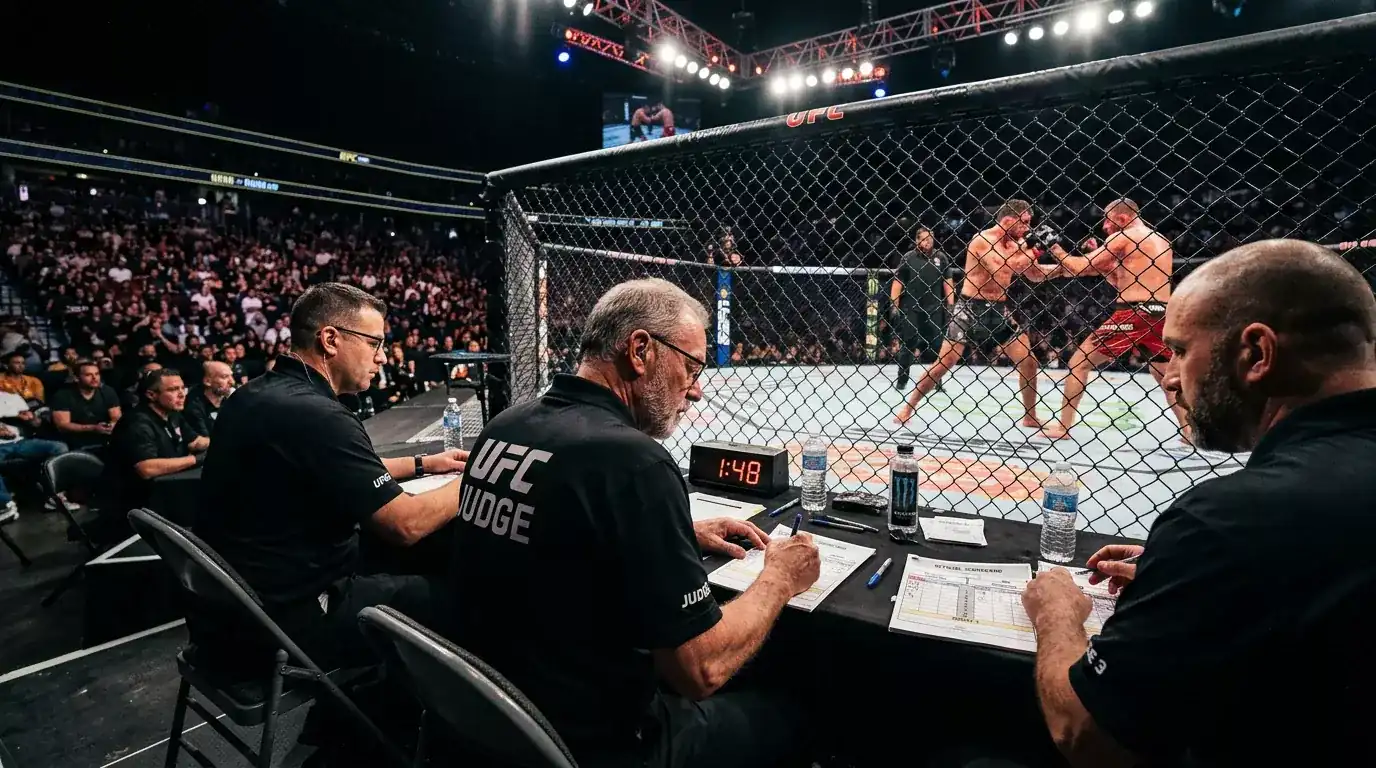
Betting integrity is another area where the UK framework matters. UFC works with independent monitoring services — IC360 and U.S. Integrity — to track wagering activity across every event. In November 2025, after a bout between Viacheslav Dulgarian and Bernardo Sopaj triggered suspicious betting alerts, UFC referred the matter to the FBI and major bookmakers refunded all wagers on the fight. UFC updated its athlete code of conduct in 2022 to ban fighters and their teams from betting on any UFC event, and the monitoring partnerships are designed to catch anomalies before they escalate.
From 19 January 2026, the UKGC banned mixed product promotions and capped wagering requirements on bonus funds at a maximum of 10x. If a bookmaker offers you a GBP 20 free bet tied to a 50x wagering requirement, that offer is no longer compliant with UK law. Check the terms.
For a full walkthrough of your rights as a UK bettor — including how the complaints process works, what self-exclusion through GamStop entails, and how ADR schemes operate in practice — I cover every detail in the guide to UFC betting and UK law.
Common Mistakes New UFC Bettors Make
Every profitable bettor I know can list the mistakes that shaped their approach, and most of those mistakes happened in the first six months. I am no exception. Here are the patterns I see again and again — in my own early records and in the questions I get from newer bettors.
The analytical mistakes come first because they are the most forgivable and the easiest to fix. Betting on name recognition instead of current form is the big one. A fighter who headlined three pay-per-views two years ago is not the same proposition today if their recent performances show declining speed or cardio. Recency bias works in the other direction too: one spectacular knockout does not rewrite a fighter’s entire statistical profile. The data covers careers, not moments.
Then there are structural mistakes — picking the wrong market for the fight in front of you. Backing a heavy favourite on the moneyline at 1/6 when a method of victory or round bet offers a far better risk-reward profile. Building five-leg parlays because the potential payout looks exciting without calculating how unlikely it is that all five legs hit. Historically, UFC odds in the -400 to -900 range have proven accurate between 88% and 93% of the time since 2013 — which sounds reassuring until you realise that even at 90% accuracy, a ten-fight parlay of heavy favourites has only about a 35% chance of sweeping.
Tool by CageMargin
90% accuracy per leg, 10 legs: only a 35% chance of sweeping the card
See how fast parlay accuracy compounds against you, and which finish-rate market suits a given weight class.
Even a model that nails 9 in 10 legs sees the odds of a clean sweep collapse as legs stack up.
Exact example from this guide: UFC odds in the -400 to -900 range have proven accurate between 88% and 93% of the time since 2013. Even at 90% accuracy, a ten-fight parlay of heavy favourites has only about a 35% chance of sweeping — the house edge compounds with every additional selection, regardless of how safe each individual leg looks.
Weight class shapes how a fight ends far more than most bettors account for — pick your market accordingly.
Weight class
Market lean
—
Exact figures from this guide: heavyweight bouts finish inside the distance over 70% of the time (roughly 50% KO/TKO), with only 28.6% reaching a decision — the lowest of any weight class. Flyweight fights go the other way, with decisions accounting for over 53% of outcomes. Across all 520 bouts in 2025 (65 KO, 103 TKO, 92 submission, 253 decision — the small remainder covers draws and no-contests), roughly half of all fights overall went to the judges.
Content is informational, not financial advice. BeGambleAware
Do
- Analyse each fight individually before deciding which market to bet.
- Accept that passing on a fight is a valid strategic decision.
- Review your bet history monthly and look for patterns in your losses.
Do not
- Bet on every fight on a card just because the event is on.
- Increase your stake to recover losses from earlier on the same night.
- Ignore the grappling matchup because you watched a highlight reel of someone's striking.
The emotional mistakes are the hardest to fix because they feel rational in the moment. Tilt — betting aggressively after a loss — is the classic example. Your fighter gets caught with a flash knockout, and suddenly you are scanning the next bout for a way to recoup. That is not analysis; that is a reaction. Revenge betting, confirmation bias, and overconfidence after a winning streak all belong in the same category.
The antidote to all three categories is the same: a process. Decide before the event which fights you are betting on, which markets, and at what stakes. Write it down. If a bet is not on your pre-event list, do not place it. That single discipline eliminates more losing bets than any analytical framework I have ever used.
Frequently Asked Questions
Is UFC betting legal in the UK?
Yes. Betting on UFC fights is fully legal in the United Kingdom, provided you use an operator licensed by the UK Gambling Commission. The Gambling Act 2005 regulates all forms of sports betting, and UFC is treated the same as football or horse racing. You must be 18 or older.
What is the easiest UFC bet for beginners?
The moneyline — also called a match winner bet. You pick which fighter wins, regardless of how or when the fight ends. For your first few bets, sticking to the moneyline on fights where you have done basic research is the most straightforward way to learn.
How do UFC betting odds work?
UFC odds tell you how much a bookmaker will pay relative to your stake. UK bookmakers typically display fractional odds (3/1 means three pounds profit per pound staked) or decimal odds (4.00 means your total return is four times your stake). The shorter the odds, the more likely the market considers that fighter to win — but shorter odds also mean smaller returns.
Can you bet on UFC fights live?
Yes. Most UKGC-licensed bookmakers offer in-play or live betting on UFC events. Odds update dynamically between and during rounds based on what is happening in the fight. Not every bout on a card will have live markets, but headline fights almost always do.
What stats should I look at before betting on a UFC fight?
Start with five core metrics: significant strikes landed per minute, significant strike accuracy, takedown average, takedown defence percentage, and submission attempts per 15 minutes. These tell you how a fighter operates on the feet and on the ground. Read them in context — stats against ranked opponents carry more weight than numbers built against lower-level competition.
How often do UFC underdogs win?
Approximately 35% of the time, making MMA one of the most upset-prone major betting sports. In 2024, fighters priced at +200 or longer won 39% of their bouts — well above the historical average of 28%. That frequency creates consistent opportunities for bettors who can identify mispriced underdogs.
What is a parlay bet in UFC?
A parlay — known as an accumulator in UK betting language — combines two or more selections into a single bet. All legs must win for the bet to pay out, but the combined odds multiply. The trade-off is risk: one losing leg collapses the entire wager, and the house edge increases with every leg you add.
Created by the ”how to bet on the ufc Fight” editorial team.